


Introduction
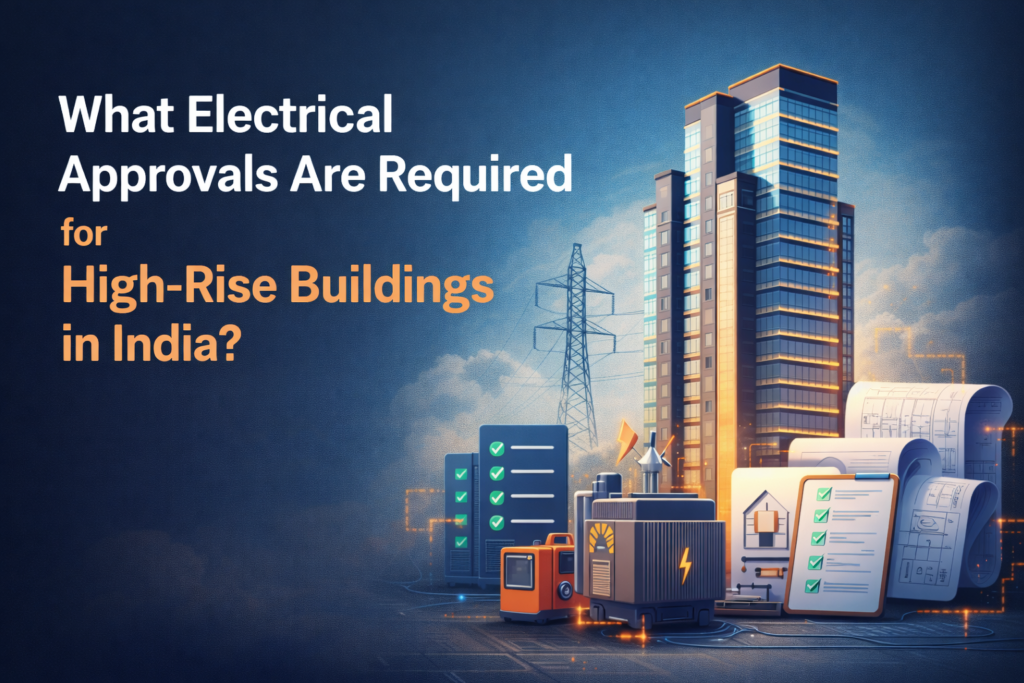
Electrical approval is a critical requirement for high-rise buildings to ensure safety, reliability, and compliance with regulations.
High-rise projects involve complex electrical systems, including HT connections, DG backup, and safety systems. Proper approvals are necessary before installation and operation.
In this guide, we explain all electrical approvals required for high-rise buildings, including process, documents, and key considerations.
What is Electrical Approval for High-Rise Buildings?
Electrical approval is the process of verifying and approving the electrical system of a building by authorities.
It ensures that all installations meet safety standards and technical guidelines.
Why Electrical Approval is Important for High-Rise Buildings
- Ensures safety of residents and occupants
- Prevents electrical hazards and failures
- Required for legal compliance
- Supports efficient power distribution
Types of Electrical Approvals Required
1. HT Connection Approval
High-rise buildings require HT connection due to high load demand.
- Transformer installation
- Breaker setup
- Electrical drawings
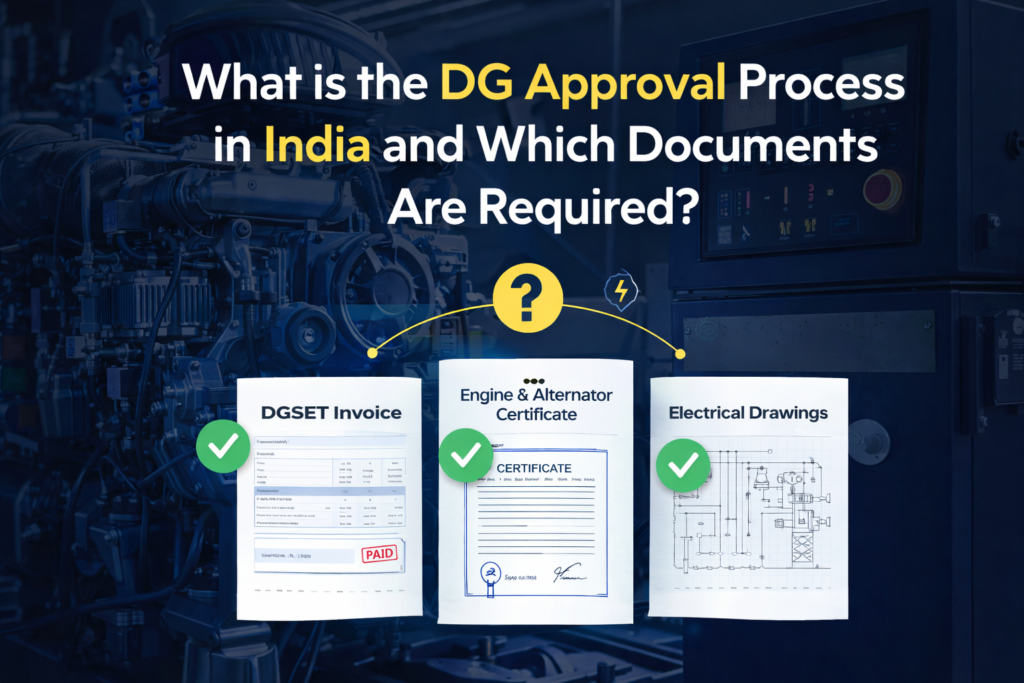
2. DG Set Approval
DG approval is required for backup power systems.
- DG set invoice
- Engine and alternator certificate
- Electrical drawings
3. Electrical NOC
No Objection Certificate (NOC) is required before system operation.
It confirms that the system is safe and compliant.
Step-by-Step Electrical Approval Process for High-Rise Buildings
1. Load Calculation
Calculate total electrical load including lighting, lifts, HVAC, and common utilities.
2. Electrical Design
Prepare detailed electrical drawings including SLD and layout.
3. Application Submission
Submit application with project and load details.
4. Document Submission
- Transformer documents
- DG documents
- Electrical drawings
5. Installation
Install complete electrical system as per approved design.
6. Inspection
Authorities inspect installation and safety compliance.
7. Approval
After verification, approval is granted and system becomes operational.
Documents Required for High-Rise Electrical Approval
- Transformer Invoice and Certificate
- Breaker Invoice and Certificate
- DG Set Invoice
- Engine and Alternator Certificate
- Electrical Drawings
Common Challenges in High-Rise Electrical Approval
- Complex system design
- High load management
- Incomplete documentation
- Coordination issues
Technical Considerations
- Load balancing
- Voltage regulation
- Earthing system
- Fire safety compliance
Benefits of Proper Electrical Planning
- Reliable power supply
- Improved safety
- Reduced maintenance issues
- Long-term cost savings
Conclusion
Electrical approval for high-rise buildings is a structured process that requires proper planning, documentation, and execution.
Following the correct process ensures safe, efficient, and compliant electrical systems.
Professional guidance can help simplify approvals and avoid delays.